





If you have Type 2 diabetes and South Asian food is how your family eats, dal on the stove every evening, roti made fresh for dinner, rice as the base of every real meal, the standard diabetes diet advice tends to miss the point entirely. Cut the carbs. Watch the starch. And what you are left with does not look anything like the food your mother cooked or the food you have been feeding your own family for decades.
Managing diabetes on a South Asian diet does not require starting over. It requires understanding which parts of what you already eat are working in your favor. There are more of them than most diabetes content will tell you. The adjustments that need to be made fit inside your real life, not a nutritionist’s hypothetical one.
This guide is for people who know the difference between tarka dal and dal makhani, who have opinions about the right rice for a given dish, and who are not interested in swapping biryani for a plain salad. The goal is to show you how to keep eating your food while managing your blood sugar better.
Why Traditional South Asian Cooking Already Supports Blood Sugar Control
Before getting into what needs adjusting, it is worth naming what traditional South Asian cooking already gets right. It gets more right than most diabetes content acknowledges.
The spices at the core of South Asian cooking are genuinely good for you in ways that go beyond flavor. Turmeric has strong evidence supporting its ability to reduce inflammation, which matters because chronic inflammation worsens insulin resistance. Fenugreek, used in cooking and sometimes taken separately, has been studied specifically for its effect on blood sugar and has shown real benefit in lowering glucose levels. Cinnamon, common in chai and many savory dishes, has evidence supporting its ability to improve insulin sensitivity. Ginger and garlic, which appear in almost every South Asian dish, support both blood pressure and blood sugar regulation.
The protein at the center of many South Asian meals, dal, chicken curry, fish, paneer, does not raise blood sugar on its own. The legumes that anchor so much of the cuisine are among the best foods someone with diabetes can eat. The problems tend to come from portion sizes of starchy sides, from certain cooking methods, and from a few specific foods where awareness helps. Traditional home cooking made the way it has been made for generations is often better for blood sugar than people realize.
Can People with Diabetes Eat Rice?
Rice is not going away. But the type of rice, how much you eat, and what is alongside it all matter a lot.
Not all rice raises blood sugar the same way. Basmati rice, the long-grain variety most common in South Asian cooking, has a meaningfully lower glycemic index than regular short-grain white rice. White basmati scores around 50-58 on the glycemic index, compared to regular white rice at 64-72. That difference is real. The starch structure in basmati digests more slowly, which means a slower, more gradual rise in blood sugar. If you are already eating basmati, you are already eating the better option.
Brown basmati is lower still, around 45-55, and it is close enough in texture and flavor to the white version that many families will eat it without objection. Parboiled rice drops further, to 38-47.
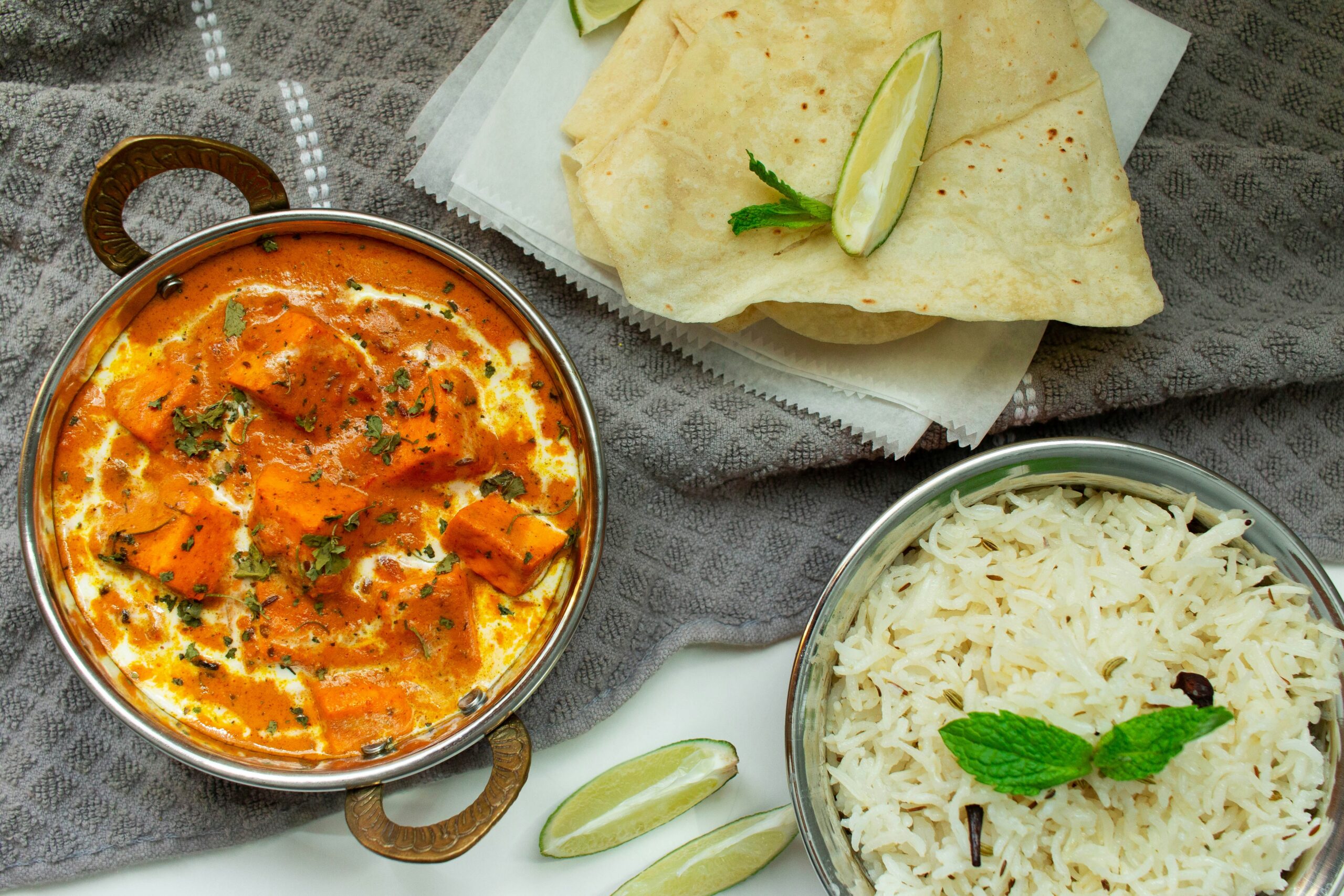
The combination on the plate matters as much as the rice itself. Rice eaten alongside dal, a protein curry, or yogurt has a very different blood sugar effect than rice eaten alone. The protein and fiber in the dal slow how quickly the carbohydrate enters your bloodstream. That is the core adjustment: rice as one component of the plate, with protein alongside it, not a large portion of rice as the meal itself.
A serving that works for blood sugar is roughly half a cup to a cup of cooked rice, smaller than what most people serve themselves by default. You do not have to give up rice. You have to find your portion.
Is Dal Good for Diabetes?
Dal is one of the best foods a person with diabetes can eat, and this is worth saying clearly because a lot of diabetes advice treats all starchy or carbohydrate-containing foods as suspect. Dal is not in that category.
Lentils score around 28-40 on the glycemic index, which is very low, because they are high in both protein and fiber, which slow digestion and help steady blood sugar rather than spiking it. A bowl of dal alongside rice actually changes how the rice affects your blood sugar. The dal is working in your favor.
The tarka, the tempering of onion, garlic, cumin, and mustard seeds in oil, adds flavor without meaningfully affecting blood sugar. If you are using ghee for the tarka, a small amount is fine. Chana dal, moong dal, masoor dal, urad dal. All good options. Dal makhani made with cream and butter is richer, but the dal itself is still working for you. It is the cream and the quantity of butter that a lighter hand helps with.
Can People with Diabetes Eat Roti and Chapati?
Whole wheat chapati has a glycemic index of around 52-62, lower than white bread at 70-75 and comparable to many other whole grain options. It is not a problem food. The portion size and what you eat alongside it matter more than whether roti is on the plate.
A standard thin chapati made from atta is a reasonable part of a meal. Two or three chapatis alongside a protein curry and dal is a different situation from eating several chapatis with a mostly-starch side.
Naan is different. Naan is typically made from maida, refined white flour, and often cooked with butter or ghee. It has a higher glycemic index than chapati, closer to white bread. At a restaurant, naan tends to arrive in large portions and get eaten throughout the meal alongside other starchy dishes. That adds up quickly. At home, a smaller piece of naan is manageable. As the main bread at a restaurant meal, it is worth being deliberate about how much you are eating.
Paratha made with whole-wheat atta and minimal fat is similar to chapati and can be managed in reasonable portions. Paratha shallow-fried in a lot of ghee is a heavier dish and worth having less of.
Is Ghee Good for Diabetes?
Ghee does not raise blood sugar. It is clarified butter, fat, with no carbohydrate. Eating ghee alongside a starch slightly slows digestion, resulting in a more gradual blood sugar response than eating the starch alone. A small amount of ghee on a chapati or in a dal is not a problem for blood sugar.
Where ghee becomes a consideration is for overall calorie intake and, for some people, cholesterol. If you have heart disease alongside diabetes, which is common, your doctor may want you to be mindful of saturated fat. But for blood sugar specifically, ghee in the amounts used in home cooking is not the issue people often think it is.
Can People with Diabetes Eat Curry and Sabzi?
This depends entirely on what is in the curry.
Chicken curry, fish curry, paneer, and egg-based dishes are protein-centered and do not raise blood sugar on their own. The masala base, tomato, onion, ginger, garlic, spices, is fine. A good protein curry made with real ingredients is one of the better things to eat when you have diabetes.
Potato-heavy curries are where things get more complicated. Aloo gobi made mostly of potato, saag aloo, potato-based gravies. Potato has a glycemic index of around 78-82 boiled, which means it raises blood sugar quickly. If you are eating a potato curry, skip the rice or roti alongside it. Pairing two starches at the same meal, potato curry with rice or flatbread, is one of the most common ways blood sugar spikes without people realizing why. A smaller portion of the potato dish alongside a larger portion of protein and non-starchy vegetables is a much better approach than making it the centerpiece of the meal.
Mixed vegetable sabzis are generally good. Leafy greens, cauliflower, eggplant, bitter gourd, karela, okra. These are low in starch and do not raise blood sugar. Bitter gourd specifically has some evidence behind it for blood sugar management and has been used in traditional medicine for exactly this reason.
Coconut milk-based curries common in South Indian and Sri Lankan cooking add fat, which slows how quickly carbohydrates affect blood sugar. A moderate portion of a coconut curry alongside rice is more manageable than its reputation suggests.
Is Biryani Good for Diabetes?
Biryani is rice-based, so portion size is the main consideration. The rice in biryani is typically basmati, which has a lower glycemic index than regular white rice. The meat or vegetables mixed through it add protein, which slows carbohydrate absorption.
A moderate portion of biryani alongside some raita and salad is a manageable meal. The problem with biryani in a restaurant setting is the portion size, which is typically far more rice than one serving. At home, where you control how much goes on the plate, it is more workable.
Raita alongside biryani is genuinely helpful. The yogurt provides protein and slows how the meal affects blood sugar. If you are eating biryani, keep the raita.
Cooking for a Family When You Are the One with Diabetes
The practical challenge in many South Asian households is not knowing what to eat. It is that you are cooking for a full table, not just yourself. The food you make is tied up in how you take care of people. Being told to eat differently does not just feel like a diet change. It can feel like a disruption to something more important than food.
You do not have to cook two separate meals. Most adjustments that help blood sugar are simply better cooking for everyone, less oil, more vegetables in the masala base, protein as the anchor of the plate. A child eating a slightly less oily curry and more dal is not being deprived.
The practical approach is to cook for everyone, then manage your own plate at the table. Same pot. Different portions. The dal is the same dish for everyone. The amount of rice you take is yours to control.
The harder part is the social dynamic around food in South Asian families, the relative who insists you eat more, the assumption that declining food is an insult to the cook, the holidays when everything comes out at once. One plate at a celebration is not what determines your A1C. What you eat on ordinary weekdays is.
How to Use Blood Sugar Monitoring to Learn Your Patterns
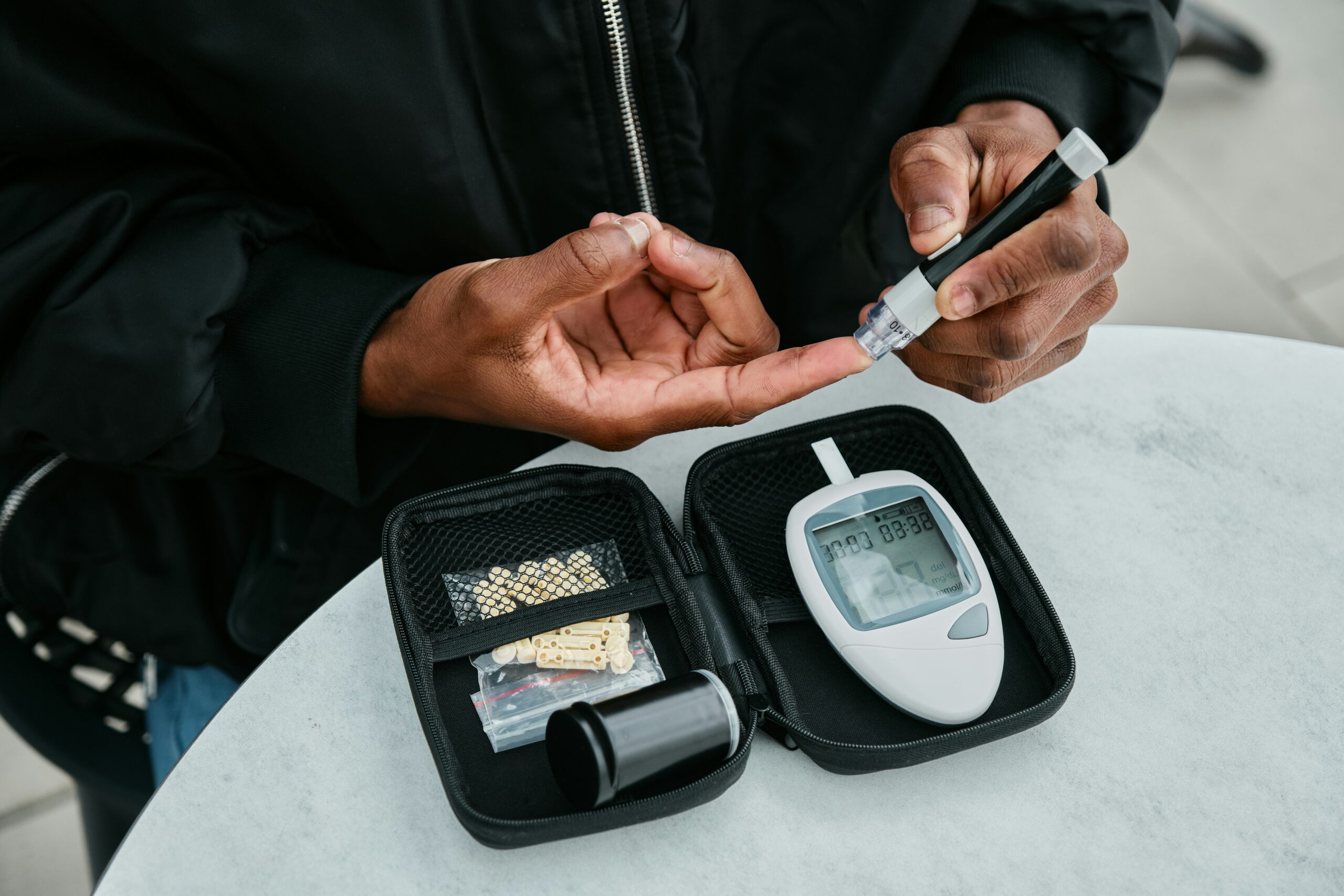
A useful approach: check your blood sugar before a meal, then again two hours after. If the number rose sharply, that combination of foods is worth adjusting. Over time, you start to learn your own patterns, which foods move your blood sugar more than others, which portions work. It becomes less guesswork and more information.
If you are on Medicare, there are programs designed to support you through exactly this process, with a real care team, not just a handout.
How Chronic Care Management Through Pod Health Can Help
Chronic Care Management through Pod Health connects Medicare members with a dedicated care coordinator who checks in regularly, helps you track patterns in your blood sugar, and works with your doctor to adjust your care when something is not working.
For many members, the most useful part is having someone to call when you are not sure whether a particular food or meal is moving things in the right direction, someone who knows your history and can give you a straight answer.
Pod Health serves Medicare members across all five boroughs of New York City, including Staten Island, Brooklyn, Queens, the Bronx, and Manhattan, as well as Westchester County, and Florida. If you would like to find out whether you qualify for Chronic Care Management for diabetes at no cost through Medicare, contact us to speak with a care coordinator.